
Reflections on planned and organic social action in Medellín
Dr Sean French Research Fellow, QCAP Medellín QCAPture Series 2/6.
Sean is a Research Fellow in Queen's Communities and Place (QCAP). He co-manages the Community Research Network which facilitates skills and knowledge sharing between the university and six inner-city communities in Belfast. The aim of this network is to empower people to become community researchers who use their skills to address issues they prioritise. His research sits within the strategic dimension of place Education, Skills, and Inclusive Innovation which investigates the relationship between working-class communities, education, and urban futures, in the context of a growing knowledge economy. His previous doctoral research was an ethnomusicological-historical study of Loyalism and marching bands in Derry, Northern Ireland. This looked at contested identity, soundscapes, and tension between academic-theoretical and ethnographic definitions of the political.
In the 21st century, policymakers and academics of urban development have paid increasing attention to the grassroots and community sectors as legitimate players within the process of urban development. With various ideas – such as “place-based leadership” and broader devolution of decision-making to regional or hyper-local bodies – agency at the organic or grassroots level has been increasingly accommodated in planning and policy. In recent years, the academic concept of social infrastructure (Eric Klinenberg 2018) has particularly advocated for investment in the spaces which foster organic communal social connections like community centres, green spaces, schools, local shops and more. In this framework, collaborating with and investing in the infrastructures which support community life is seen as a means for making society more egalitarian and affecting positive social change. QCAP’s work largely fits within this vision in which change is driven through community-led collaborative research projects.
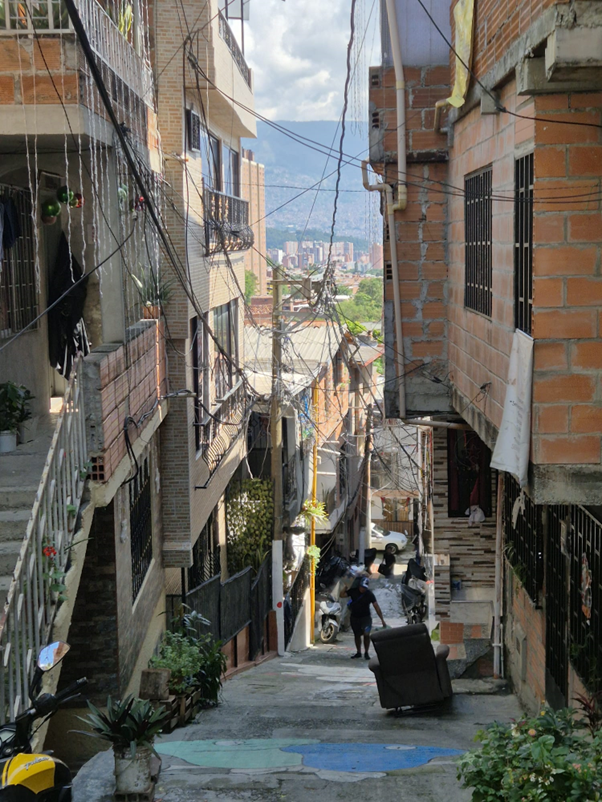
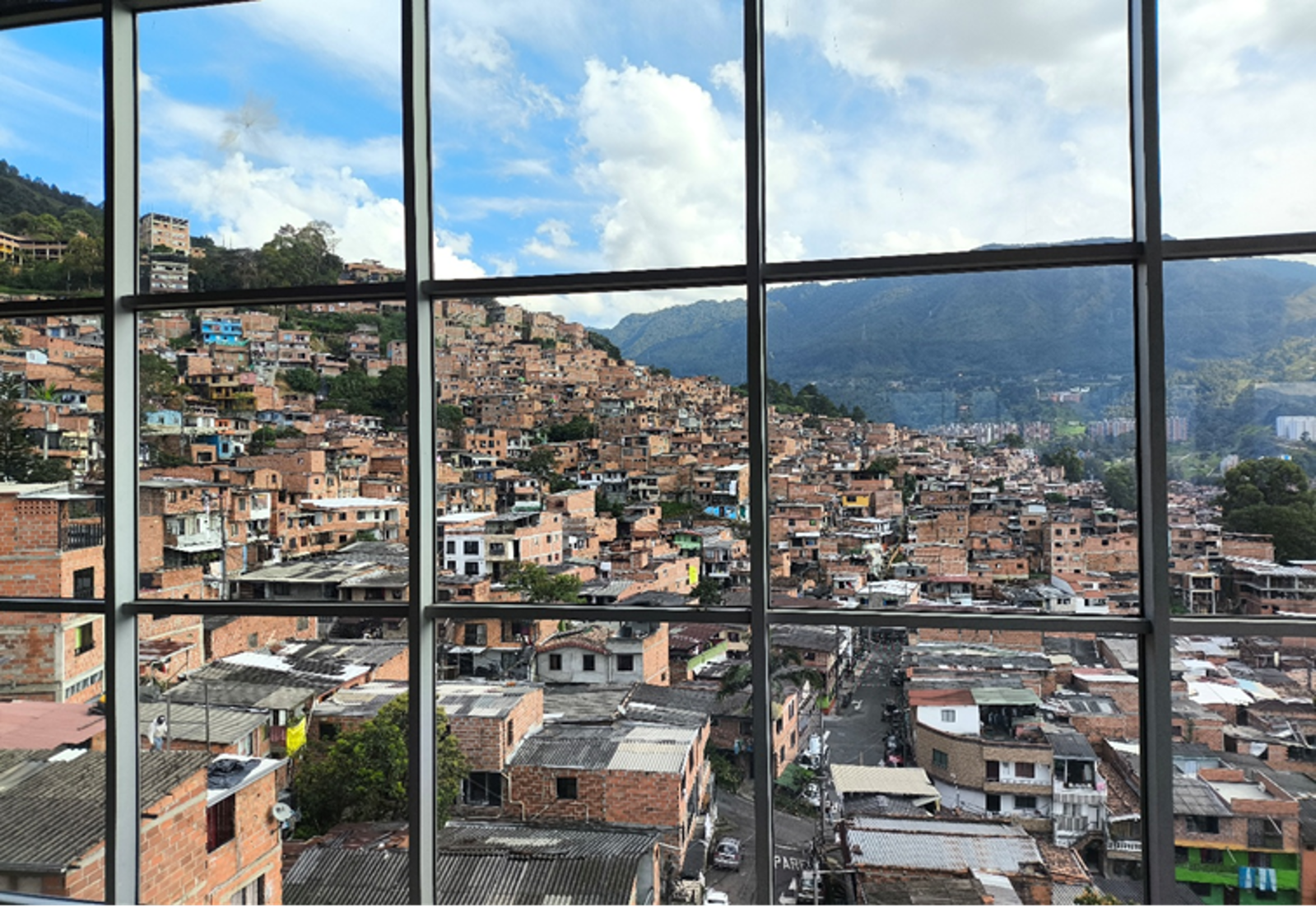
The recent trip to Medellín as part of the global Improving Inclusive Innovation Outcomes (i3o) partnership was an interesting opportunity to reflect on the relationship between the different levels of policy and community. Many of the government employees we met attributed a large part of the city’s success to their ability to disconnect politically from the rest of Colombia. They stated that through obtaining more autonomy at the city-level, they were able to pursue a policy agenda which was more suited to their particular ecosystem of transport infrastructure, educational infrastructure, physical terrain, and tradition of business. Interestingly, this attitude was echoed at the local communal level in relation to the city government: smaller bodies often felt that they could accomplish more through their own self-directed action rather than via city government intervention. The hillside comunas we visited had been largely self-built, with people applying for planning permission through local gangs or other informal bodies rather than the government.
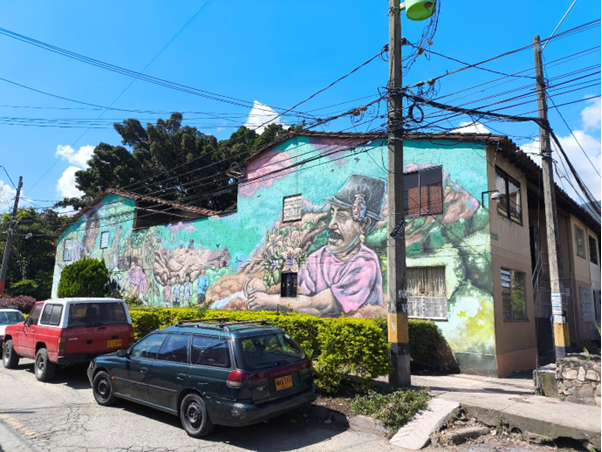
This level of community autonomy was only made possible through the strong social infrastructure present in these neighbourhoods. A local activist described a spirit of convite, of coming together in communal celebration, which people drew on to make real material change in the communas. Houses and roads were built by the people themselves in a voluntary act of coming-together, generally culminating with a big stew cooked in a metal drum on an open fire to celebrate at the end. This ethos, a form of cultural capital, flowed into other projects like the redesign of a waste ground site in communa 13. Local people also came together to paint a mural at the site which drew on Andean aesthetics, attaching value to a previously de-valued space. To prevent the return of rubbish-dumping, they planted plantas duras, spiky and physically strong plants, that formed a natural and sustainable barrier around the renovated site.
Similar to many places around the world, government policies and actions sat in tension with this community self-organization. The government had demolished some of the so-called impossible architecture of the comunas and some of the violence which plagued Medellín in the late twentieth century came from government actors toward civic society such as gangs, trade unions, and community leaders. Some of the community members we met complained that there was also a disconnect between the formal commemorations of the conflict. Many communities had erected their own memorials to commemorate their dead loved ones, but these were largely unacknowledged in official narratives.
This organically-led social action can be seen all around the world, but perhaps what was most striking in Medellín to my outsider’s perspective was the extent to which communities seemed disconnected from government intervention. Literature on social infrastructure (Klinenberg 2018) often looks at policymaking and investing in infrastructure as a form of ‘social gardening’ which cultivates this vibrant civic life. However, in Medellín it seemed a live but disconnected from policymaking in some communas. This is not an ideal state of affairs, as the inequality in investment was clear to see in the city. However, the autonomy of the communities in Medellín was maybe an extreme manifestation of the ideal which is often increasingly propagated in policy and political rhetoric in the UK and Ireland: give communities a voice and the right to a degree of self-determination. Seeing this in practice, it emphasized how this ideal of devolving agency to communities in policy and decision-making is not realized in practice in the UK and Ireland. It is important moving forward in our own work in QCAP to think about where we set the horizons for devolving agency to communities and what we think is possible. How can this rich social infrastructure and spirit of community action be further cultivated in Belfast while maintaining order and government support? Often, within the current landscape of apparently collaborative decision-making, communities feel they have little agency in the process. Through investing in the rich social infrastructure of our own communities and truly allowing communities to lead in the change which affects them, Belfast could perhaps capture some of this grassroots spirit in its own policymaking.