

Is Belfast fully embracing social urbanism in its innovation strategies?
David Marlow Chief Executive, 3LE Medellín QCAPture Series 1/6.
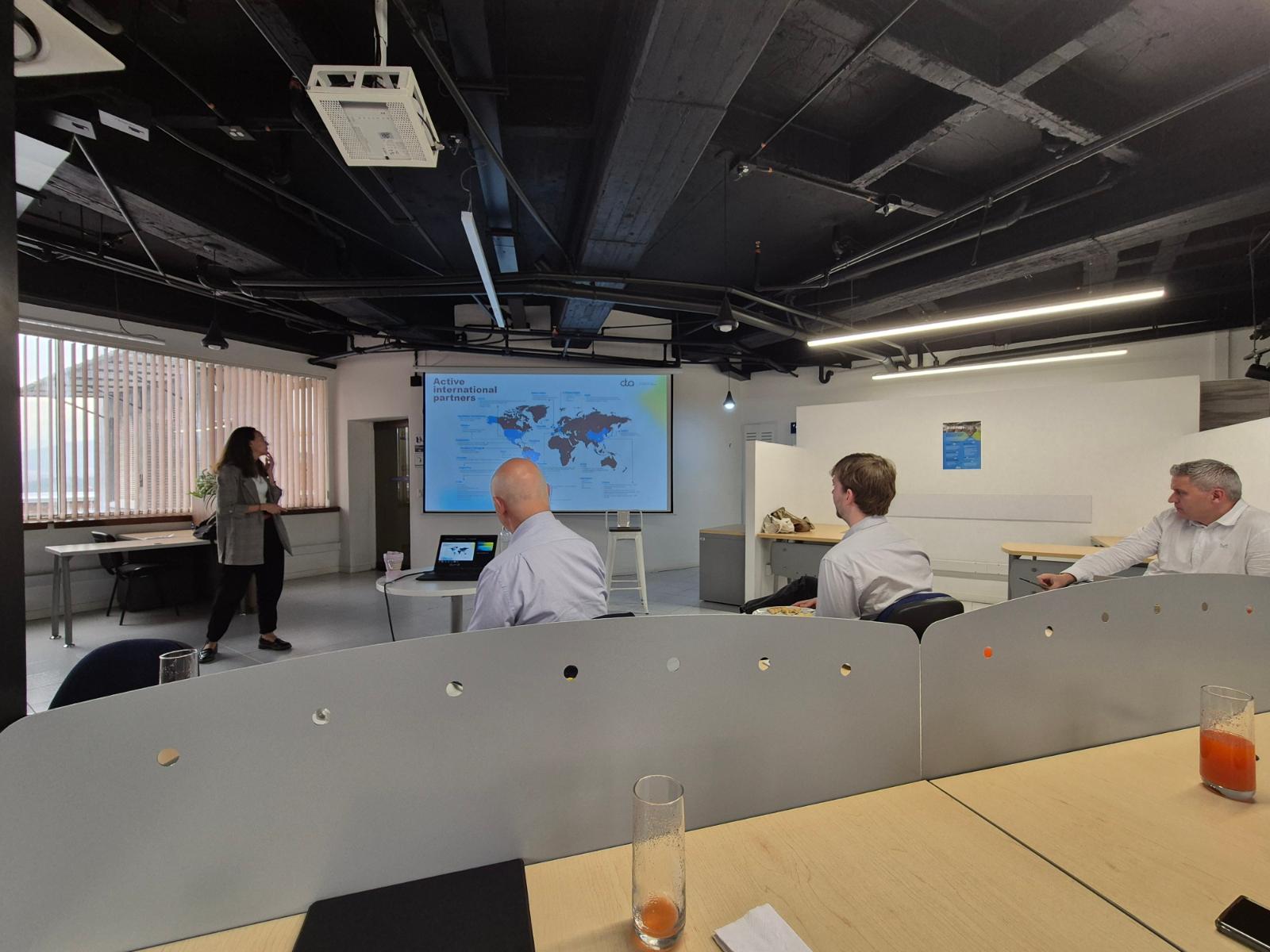
David is an experienced Chief Executive and Development Economist. His 25 years in senior positions in public service both domestically and overseas culminated in eight years as Chief Executive (CEO) – firstly of a large metropolitan local authority and, from 2003-08, of the East of England Regional Development Agency (RDA). He established Third Life Economics (3LE) in 2008/09, and since then has worked at the forefront of local economic development, placemaking, devolution and inclusive growth and wellbeing both in the UK and overseas – including as Visiting Professor of Practice at Newcastle University. He also cohosts the LED Confidential podcast which has produced over 100 episodes on local economic development and placemaking since its launch in 2022. David has been part of the Improving Inclusive Innovation Outcomes (i3o) programme since its inception – working with Belfast and the other three cities and contributing to the development of inclusive innovation policy and practice more widely. He visited Medellin in December 2025 with the Belfast team, co-facilitating the session to which this blog refers.
Two cities, two transitions: Belfast and Medellín. Both have spent a generation—since the traumas of the 1980s and 90s—pioneering urban renewal to reduce social divisions, foster peace, and forge identities beyond conflict. The decades since Pablo Escobar’s death in 1993 and the Good Friday Agreement (GFA) in 1998 have seen a shared, massive investment in Science, Technology, Research, and Innovation (STRI). Yet, a crucial question hangs over both Belfast and Medellín: Can high-value, technology-driven strategies truly deliver inclusive outcomes for ALL communities, especially those historically marginalized by conflict?
To discuss that question, a Belfast team—from QCAP, the Belfast Community Research & Innovation Network (BCRIN), and the City Council—recently visited Medellín under the international ‘Improving Inclusive Innovation Outcomes’ (i3o) programme. As a core member of the i3o team, I was delighted to support this intensive exchange of experience.
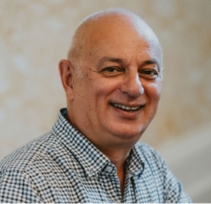
This blog offers six personal reflections drawn from a key session the Belfast delegation had with the CTA (Centro de Ciencia y Tecnología de Antioquia) — a crucial institution bridging Medellín's academic, private, and government sectors to drive regional STRI.
First, inclusion-rich STRI outcomes are much more likely if transformation is socially, rather than technologically led. Medellin’s infrastructure investment in the metro and cable cars to connect marginalised communities to the city’s economic and social heart exemplifies social goals driving engineering solutions rather than vice-versa.
Second, grassroots movements need sustained social capital and community infrastructure support if they are to influence and feel some degree of ownership of the changes city reinvention entails. Medellin’s public and private sectors enabling of public parks, art and culture in hillside ‘communas’ complements city scale economic progress with a sense of agency for localities where many vulnerable communities live and where poorer young people grow up.
Third, building and sustaining trust is absolutely key to countering histories and traditions of violence, conflict and corruption. People matter! Wherever they are located physically or institutionally, Medellin has built a cohort of formal and informal leaders who know each other, and who are prepared to discuss and agree strategies for delivering change effectively, notwithstanding setbacks or disappointments that inevitably occur.
Fourth, establishing and operating an innovation eco-system is extremely hard work and needs partnership intermediaries. The CTA is a triple-helix partnership animating a STRI eco-system of over 100 different institutions. Sharing understandings, agreeing key priorities, and resolving differences is very hard work. Perhaps CTA is less convincing on how they interface with a community pillar of a quadruple helix that might be Belfast’s preferred approach. But the principle of putting in the hard graft to deliver an innovation eco-system with inclusion-rich vision and values is indisputable.
Fifth, working across eco-systems is as important as working within them. Inclusive innovation cannot be delivered without intense complementary skills, enterprise, infrastructure and community interventions. In Medellin, public destinations like Parque Explora brings science to local people in the heart of the Innovation District. Business communities are expected to go well beyond shallow, tick-box corporate social responsibility to put effort and resources into social problem-solving.
Sixth, does where the money comes from determine how the city delivers inclusion-rich intervention? One big apparent difference between Belfast and Medellin is the extent to which Northern Ireland’s post-GFA investment has been externally and internationally financed, whilst Medellin’s has more often come from indigenous sources. Perhaps, Medellin’s ability to develop a distinctive model of social urbanism gives it an edge over more orthodox STRI investment strategies.
I recognise these are neither the only insights from the session nor from the wider visit. I do not present them as conclusive. All participants recognise them as work in progress. Our Medellin partners acknowledge that the conflicts and tensions that shaped their history are not yet over; nor are the solutions anywhere near fully delivered.
But perhaps I may conclude with three tentative suggestions for further consideration and debate as QCAP, BCRIN and BCC return home.
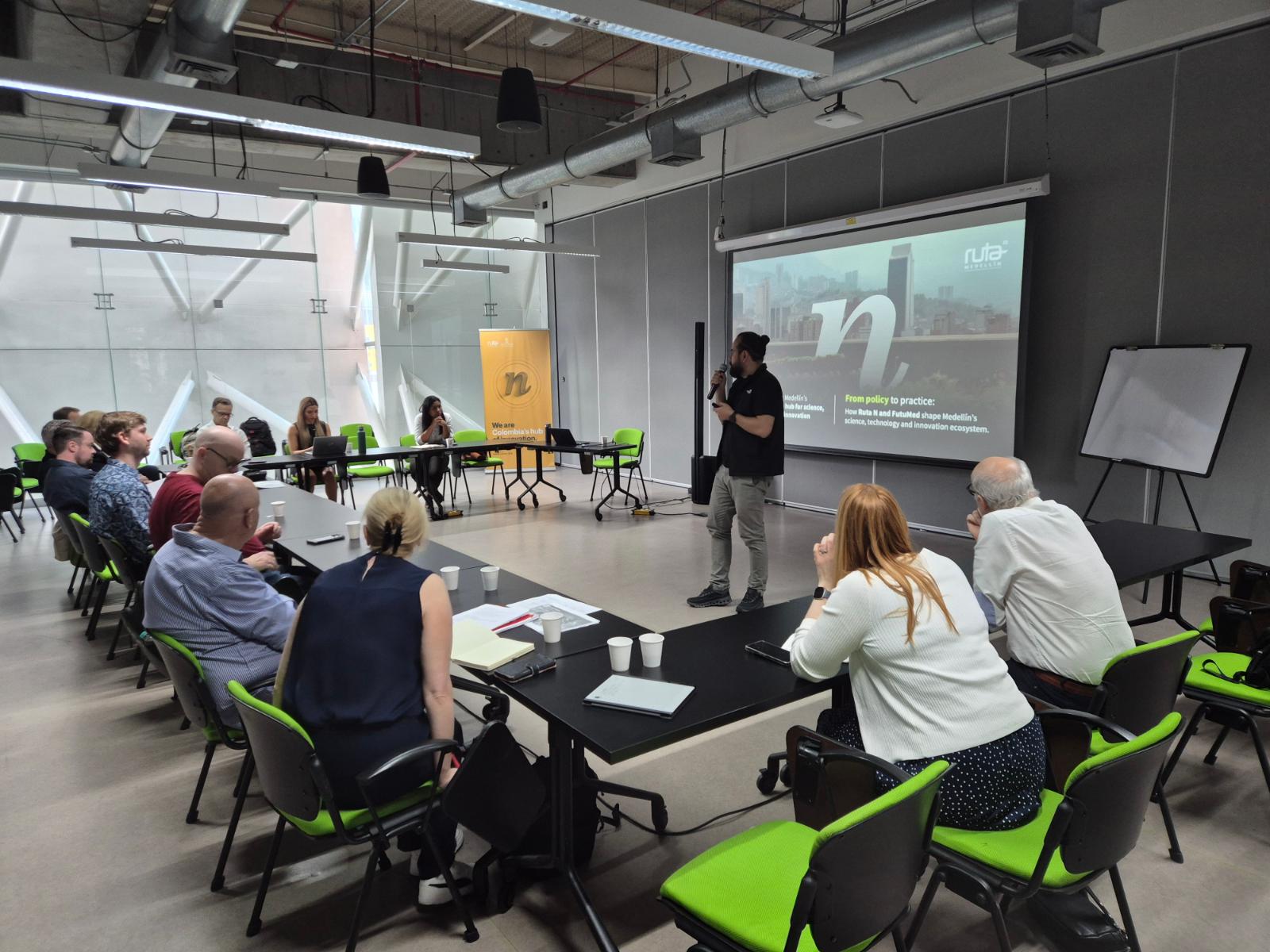
Strengthening Belfast’s commitment to social goals driving STRI investment means programmes like the City Region deal and further STRI investments in the city region must be assessed as much on their ability to reduce inequality and division, as on economic or commercial innovation returns.
Cultivating indigenous leaders and finance who prioritise collective long-term strategies over short term opportunism or the latest fad from Westminster is key to bringing this commitment to fruition. In the case of indigenous financing, how can Belfast businesses be incentivised and persuaded to step up to medium- and longer-term plates?
And finally, one area where the Belfast team has real nascent strengths – in the community pillar of a quadruple helix approach. How far can BCRIN and other relevant community role players be welcomed at the top table of strategic and funding decision-making – not that they will always determine the decisions, but at least as an equal legitimate voice in that determination?
Similar to Medellin, resolving these issues will in no way complete a just Belfast post-GFA journey. But they will surely help Belfast deliver richer inclusive innovation outcomes.