

Inclusive by Default: Collaborating, Connecting and Innovating for Better Outcomes
Kara Bailie Deputy Director (Belfast Region City Deal), Queen’s University Belfast Medellín QCAPture Series 3/6
Kara has 15 years’ experience in senior leadership in higher education, working in a diverse range of roles including quality assurance, space management, student wellbeing and postgraduate student experience, across HE institutions in England and Northern Ireland. Since November 2021 she has been the Deputy Director for the £250m strategic change programme to drive innovation and economic growth that is being delivered by Queen’s as part of the Belfast Region City Deal Building partnerships to enhance outcomes has been a constant theme in her work, including engagement across research and education, community, industry and government. Her interests include social innovation, developing collaborative and innovative environments and skills development.

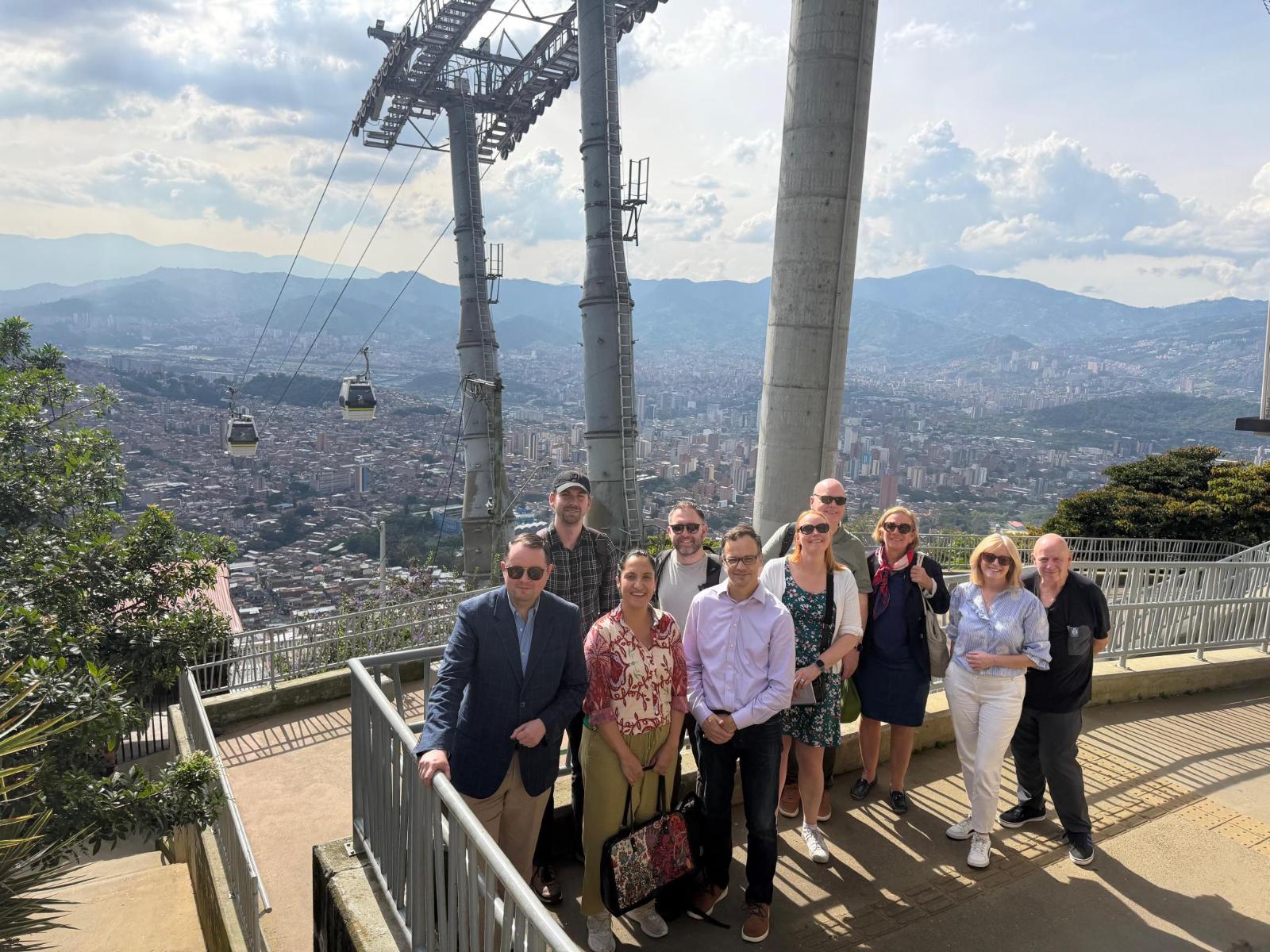
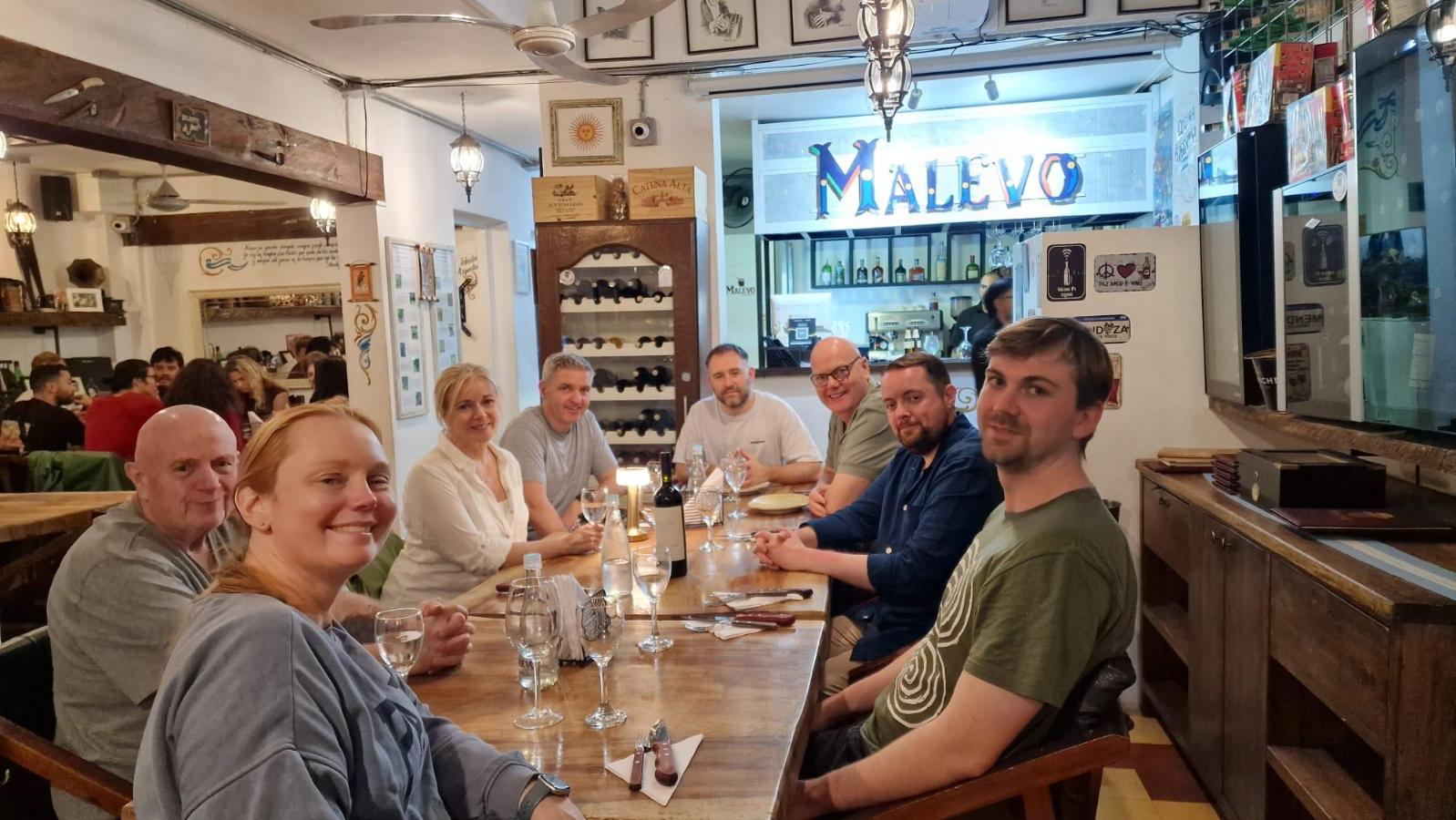
I was incredibly fortunate to join colleagues from QCAP, three Belfast communities who are in QCAP’s Community Research Network, Belfast City Council and Innovation City Belfast on a research & learning exchange to Medellίn, Colombia. This was part of a wider research & innovation collaboration called i3o – Improving Inclusive Innovation Outcomes, with the Universities of Newcastle and Pittsburgh.
The time in Medellín has given me further insight into the possibilities for identifying common challenges and co-creating across a wider range of stakeholders, and seeing innovation through a wider lens, to truly realise the benefits of the City and Growth Deals in Northern Ireland. In my reflection, I outline some of the aspects of innovation that stood out to me in Medellίn, and what that means for innovation in Northern Ireland.
Living up to a Purposeful and Ambitious Vision
Conversations with innovation leaders across communities, universities, public and private sectors were infused with optimism, vision and hope for the future of their place. This was not boastful or overblown – it was ambitious but grounded in confidence for what they have already achieved, and in their ability to drive to the next level. Leadership in Medellίn is thinking far beyond a one-year horizon, and all agencies and parts of the ecosystem were on the same page.
The power of ambition was exemplified in a discussion with colleagues from the Centre for Science and Technology of Antioquia (CTA) outlining how Medellin was awarded the title of ‘World’s Most Innovative City’ in 2013. Colleagues indicated that they did not feel that they were deserving of the title when they entered the competition to win it - but they reflected that that application process that brought the city together made them believe they were innovative. Now they feel tremendous responsibility to live up to the name.
Reflecting with Belfast colleagues, it was evident that bringing Science, Technology and Innovation ‘to the ground level’ needs co-ownership and co-creation at the core – with communities and 3rd sector as partners. This can be challenging to follow through on when focus is on revenue and commercialisation. Availability of a skilled workforce is recognised as an integral element of innovation, providing a common and shared goal across communities, industry, academia and government – how can we turn that alignment into impact?
Integrated and Interconnected Innovation with Skills at the Core
In Medellin we were able to see examples of innovative ways that public assets and infrastructure were used to drive accessibility. The ‘jewel’ of inclusive innovation in Medellίn is the metro system – built around accessibility and movement for all citizens, with six cable car lines for those highest in the mountains, digital literacy hubs for children in metro stations and a public library at the core of the busiest metro station. The integration across forms of transport, along with integration across public services, established the metro as the ‘spine’ of the ecosystem. It sparked thinking about the connection between our public assets, infrastructure and innovation investment, particularly its potential to accelerate access to tools and skills for innovating.
The innovation corporation Rutan is located within an open and accessible area that includes the city’s beautiful Botanic Garden, Parc Explora (like W5, Tayto Park and Exploris together) and the innovation centre dedicated to teachers, MOVA. The physical proximity positioned innovation and creativity in teaching and learning as a core part of the innovation ecosystem. Through our discussions, we saw that interconnection and collaboration across these components established a depth of expertise that was globally recognised.
The University of Antioquia ‘extension’ areas – which includes commercialisation of research and innovation – plays a role in supporting the work of the University, including supporting fees for students from lower income backgrounds. There is a circularity to innovation success being used to invest in accessible education and skills, an essential element of successful innovation.
Building a Bigger Innovation Ecosystem
If our ambition is for social change and economic impact through regional innovation, innovation needs to be explicitly recognised and celebrated beyond commercial value.
Amazing innovation is happening in communities in Northern Ireland. Representatives from communities speak passionately about the challenges they are working to address in novel ways, the expertise they have in developing solutions that work for their areas, and the incredible impact they have seen when a collaborative approach brings partners together around a problem. Key to this is the community being supported as the problem-owner, with benefits that include building their capacity and skills for innovation.
Momentum One Zero, one of the Queen’s-led innovation centres, has been piloting co-creation approaches to setting innovation challenge topics, with solution teams coming together across a range of academic disciplines, and including community, charity and private sector partners. Smart City-zens, a pilot citizen science project co-created and carried out with and by the Market community in South Belfast, was one of the first innovation projects in Momentum One Zero, supported by EPSRC Impact Acceleration Account and Queen’s co-investment. This demonstrates a potential model for bringing together challenges and solutions co-shaped by communities, innovation centres and other government and industry partners.
Where we go from here?
Medellίn is an incredible city – vibrant, beautiful and lively, with exciting ambitions and a challenging legacy. Our delegation found parallels to the innovation journey in Belfast, gained new perspectives on the strengths and opportunities we have in Northern Ireland, and ignited a sense of possibility in what we can achieve together.
The Community Research Network, an Innovate UK funded initiative led by Queen’s Communities and Place and the Market Development Association connecting several inner-Belfast communities, presents a mechanism to build capacity and closer working between our institutions and communities based around place-based challenges. This important work needs to be supported by the way we engage our innovation assets in Northern Ireland, with government and private sector partnership to enable prioritisation of community-defined challenges, and joined up solutions.
The legacy I want to take from this experience is about using our relatively close physical and network proximities in NI to our full advantage, to establish Belfast as a City of Innovation that defaults to inclusive collaboration as a mechanism for delivery – not to tick a box, but because it’s a better way to get better outcomes.
Kara Bailie, Deputy Director Strategic Programmes (BRCD at Queen’s)