

Grid Square Data Analysis, Community-Led Change and A Plan to Grow
This QCAPtures reflects the academic contribution of QCAP to the launch of A Plan to Grow, a community-led placemaking framework for the Greater Shankill area of Belfast.
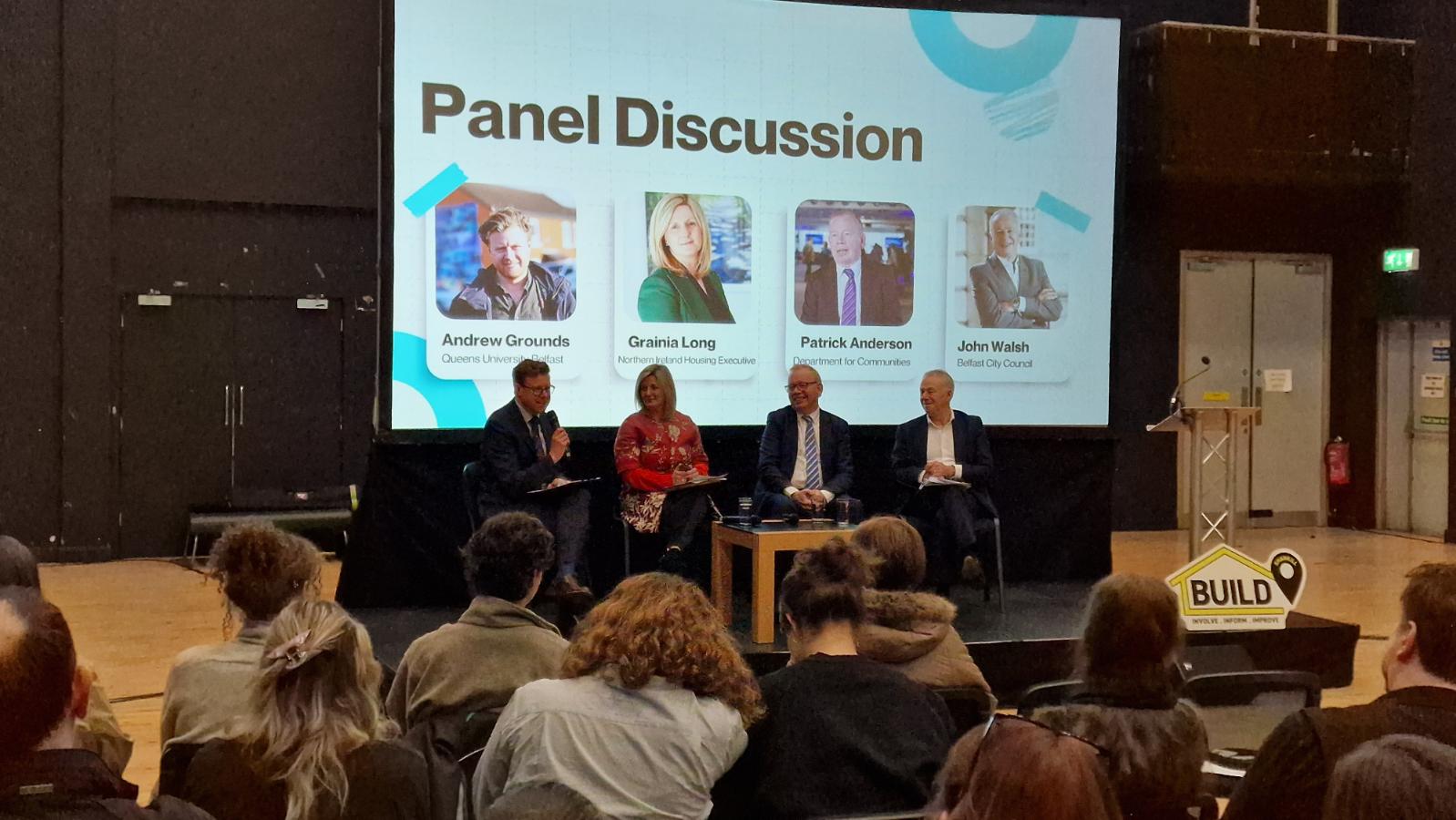
The launch of A Plan to Grow represents a new framework for physical regeneration across one of Belfast’s most historic areas, and Queen's Communities and Place has been proud to play a supporting role in ensuring that the plan is grounded in robust data and place-sensitive evidence. The engaged research piece, led by Dr Andrew Grounds (QCAP’s Deputy Director) and colleagues from QCAP (Prof. Kathryn Higgins) and the School of Natural and Built Environment (Prof. Ian Shuttleworth, Dr. Sara Ferguson and Stephen McKeever), reflects QUB's overarching strategic commitment to the Greater Shankill area, as formalised in the Memorandum of Understanding signed in February 2024. It also builds on a body of regeneration research and local housing analysis delivered since the inception of QCAP, with academic input and support from Prof. Brendan Murtagh.
The framework for A Plan to Grow itself emerged from an extensive process of community engagement, drawing together residents, community groups, and statutory partners, including the Department for Communities, Belfast City Council, and the Northern Ireland Housing Executive. Central to that process was the BUILD group (Better Understanding in Local Development) a coalition of community leaders focused on tackling physical dereliction and campaigning for meaningful investment in housing and community infrastructure across the Greater Shankill. A Local Action Group (LAG) which is made up of cross-sector representation and chaired by Dr. Andrew Grounds, and is responsible for delivering the actions set out in the plan.
Bringing Research Data Tools to Community Evidence
While NISRA data offered important baseline insights into the area's socio-economic and demographic profile, the Local Action Group identified a significant limitation: existing statistical boundaries did not align with the locally defined neighbourhood boundaries used throughout the plan making process. This mismatch risked obscuring the very place-specific challenges that the community was seeking to address.
To resolve this, academics led by Prof. Ian Shuttleworth from the School of Natural and Built Environment and QCAP applied the Grid Square Product Tool, developed as part of an ESRC-funded research project, Maximising the Value of the 2021 Northern Ireland Census: Adding Time to Place, to generate a far more granular and spatially precise evidence base for the project.
This methodology analyses Census data at the grid square level (100m × 100m), enabling a level of spatial resolution that pre-defined statistical boundaries simply cannot achieve. Crucially, the Grid Square Product provides longitudinal data spanning 1971 to 2021, allowing the team to track demographic and socio-economic change across the Greater Shankill over five decades. Each grid square was aligned to locally defined neighbourhood boundaries including Woodvale, Ballygomartin, Glencairn, and Mid Shankill ensuring that the analysis was genuinely responsive to how the community understands its own area.
The findings revealed significant variation across the six neighbourhoods in relation to private renting concentrations, health inequalities, educational attainment, and economic inactivity, all differential impacts that broader statistical analyses would have rendered invisible. This fine-grained, neighbourhood-level evidence is now available to support more targeted and evidence-based planning interventions as the 'A Plan to Grow' moves into its implementation phase.
Community Leadership and Academic Partnership
The contribution of QCAP and Queen's University Belfast to this process exemplifies the kind of engaged, applied research that sits at the core of the university's community academic partnership work. By translating complex spatial data into accessible, actionable place-based insights, the academic team helped ensure that the Local Action Group could articulate a plan for renewal with the support of new data and locally grounded evidence.
Billy Drummond from the Shankill Local Action Group reflected on the significance of the plan: "The Shankill Plan to Grow report is a key milestone for BUILD Shankill in lobbying for physical regeneration and investment in the Greater Shankill. Through the DfC Craft Kit process we have consulted extensively across all our neighbourhoods to inform this community-led plan. The essential part of any plan is delivery, and we look forward to our continued work with statutory partners to address the challenges and seize the opportunities that this plan sets out."
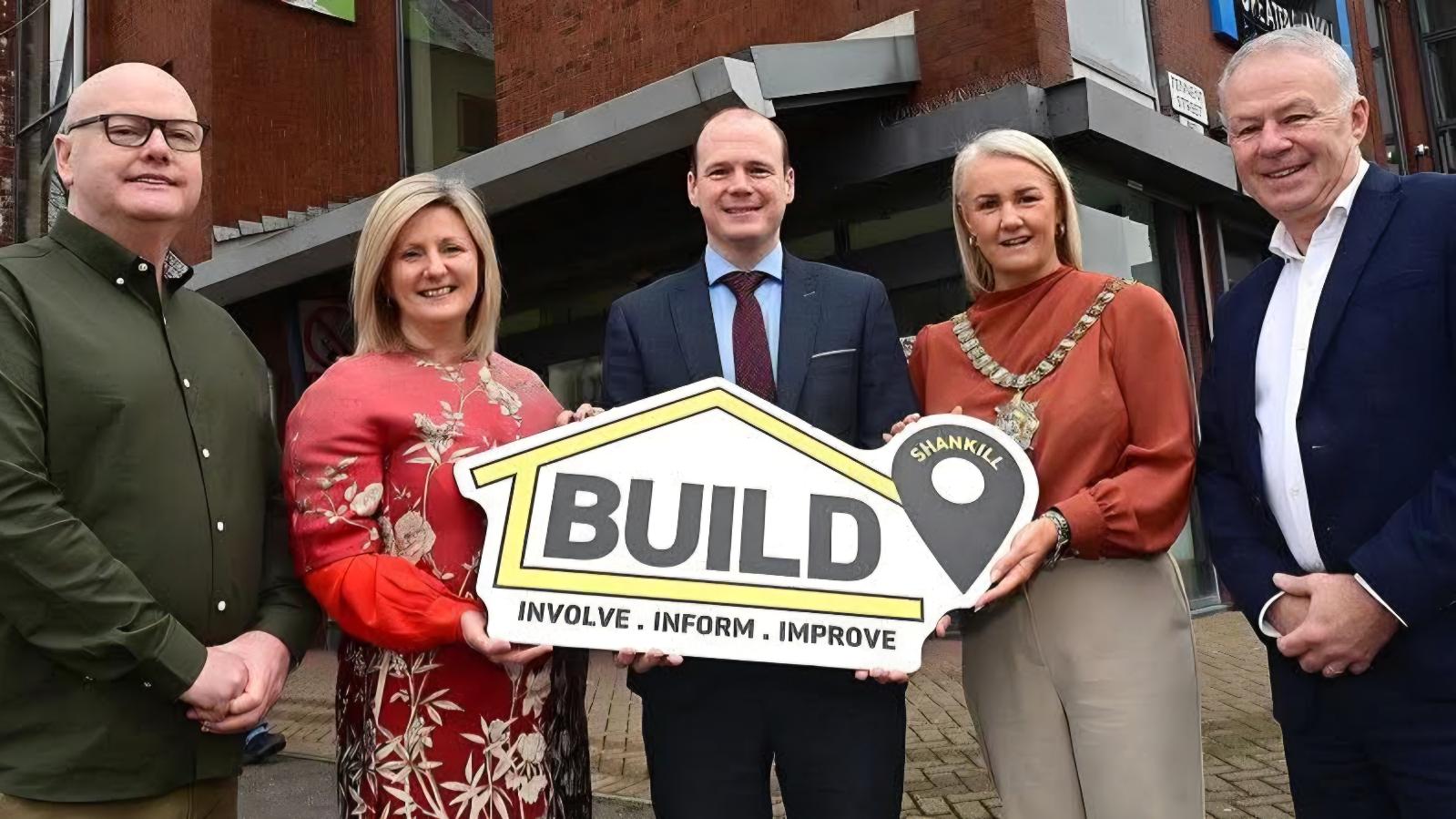
Communities Minister Gordon Lyons welcomed the plan's launch, describing it as "a genuine community-led approach to placemaking, ensuring that local people are at the heart of shaping change in their area." Belfast Lord Mayor Councillor Tracy Kelly echoed this, pointing to the "level of community leadership and the partnership approach demonstrated" throughout the process, while Housing Executive Chief Executive Grainia Long described the collaboration as "an excellent model for future work."
Moving Forward
A Plan to Grow demonstrates what becomes possible when community knowledge, statutory commitment, and academic expertise work in genuine partnership. The place-based approach developed through QCAP’s contribution will continue to support the Local Action Group as it moves from planning to delivery, ensuring that interventions are targeted, evidence-based, and responsive to the local conditions experienced by people across the Greater Shankill's diverse neighbourhoods.